
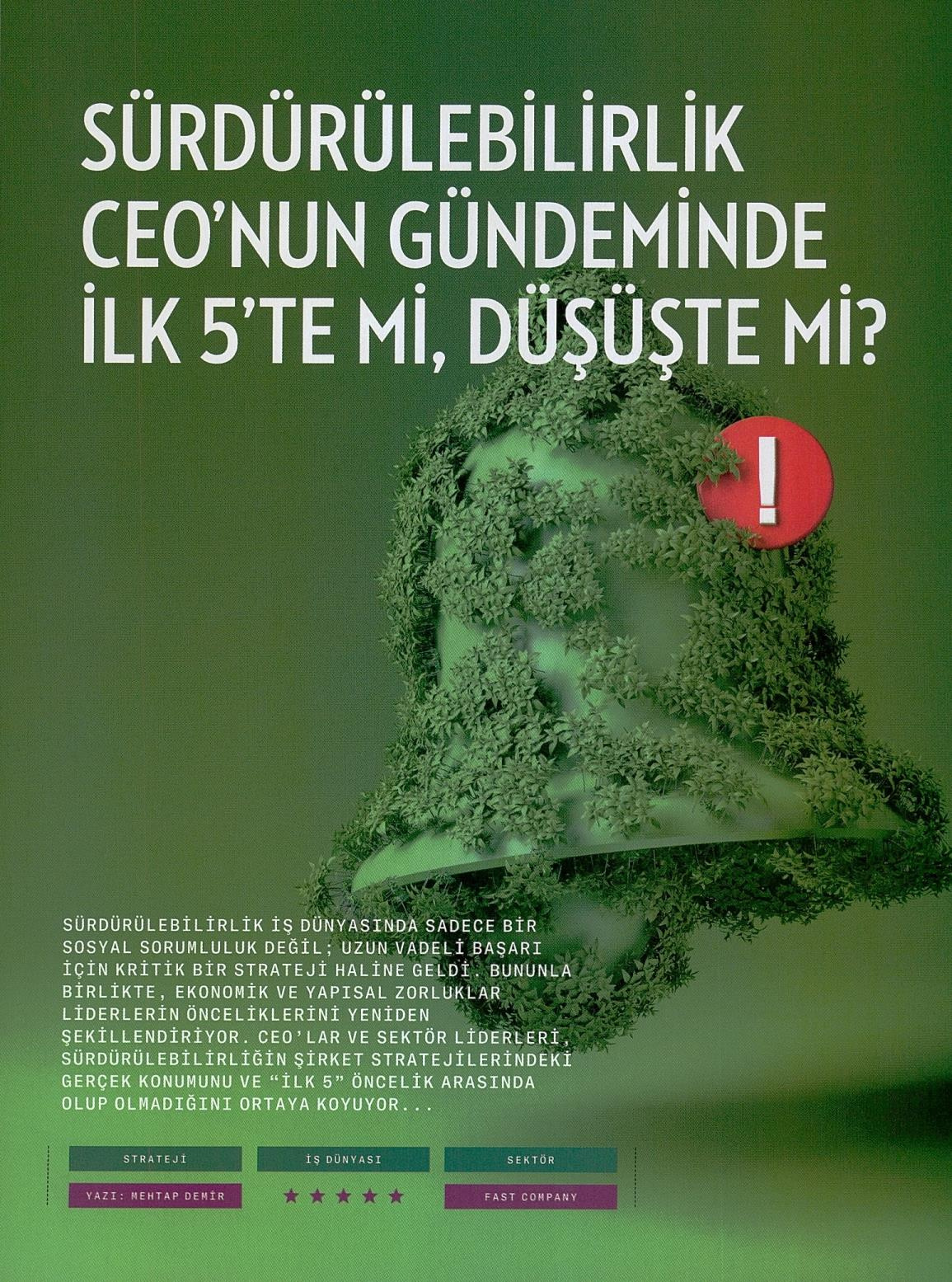
Sustainability has evolved from being merely a field of social responsibility into a critical strategy for long-term success in the business world. However, global economic pressures, geopolitical risks, and supply chain issues are reshaping CEO priorities. This landscape is prompting a re-evaluation of the true position of sustainability on corporate agendas.
According to PwC’s 28th Global CEO Survey, one-third of CEOs state that their climate-oriented investments over the past five years have directly led to revenue growth. Meanwhile, 66% of participants express that these investments have either reduced costs or, at the very least, have not increased them. These data points reveal that sustainability has become an economically rational strategy rather than just an ethical choice.
In contrast, Deloitte’s 2024 CxO Sustainability Report shows that leaders still face serious structural obstacles. Difficulties in accessing sustainable solutions, insufficient political support and regulations, short-term financial pressures, and a perception of low demand are among the primary barriers to transformation.
According to Deloitte data, the "climate" heading ranks among the top three priorities on leaders' agendas at 37%. While 85% of CxOs state they increased their sustainability investments last year, half are actively using technology-based solutions for climate goals. This trend shows that sustainability has become an inseparable part of companies' growth, efficiency, and resilience strategies.
According to the Fast Company Turkey CEO Council survey, 22% of leaders define sustainability as their first priority; 16% place it second, and 33% place it third. These results reveal that while sustainability still holds a high ranking for most companies, it is not viewed as a standalone decisive factor.
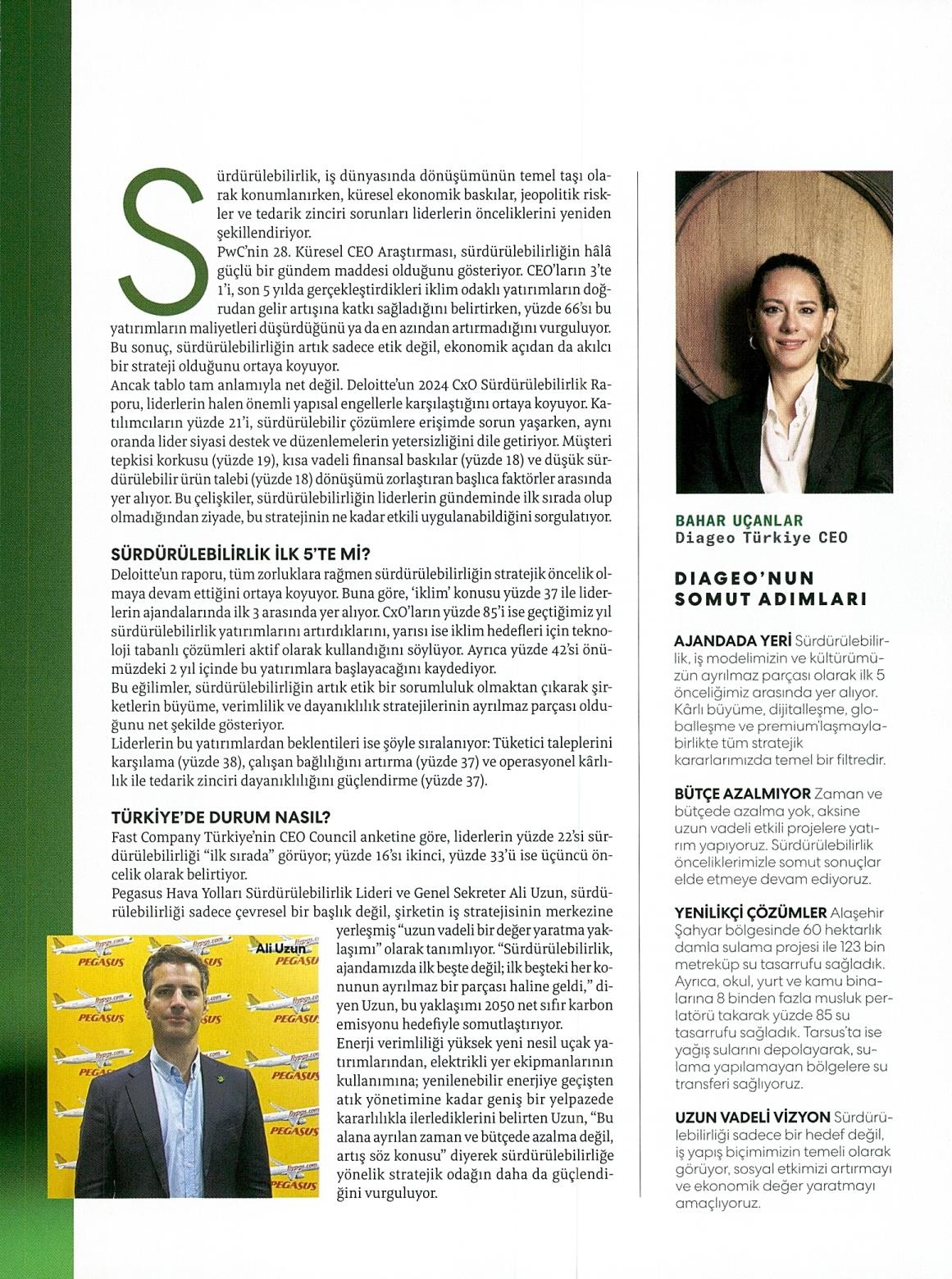
BAHAR UÇANLAR, CEO of DIAGEO TURKEY, summarizes the place of sustainability in the company's strategy with these words:
"Sustainability ranks among our top 5 priorities as an inseparable part of our business model and culture. Alongside profitable growth, digitalization, globalization, and premiumization, it is a fundamental filter in all our strategic decisions."
UÇANLAR emphasizes that there has been no reduction in time or budget in this area; on the contrary, they are investing in long-term and impactful projects. Through the 60-hectare Drip Irrigation Project implemented in the ALAŞEHİR ŞAHYAR region, 123 thousand cubic meters of water savings were achieved. Additionally, up to 85% water savings were obtained with more than 8,000 aerators installed in schools, dormitories, and public buildings. In TARSUS, water transfer is provided to non-irrigable areas through Rainwater Harvesting.
Many leaders in Turkey view sustainability as the foundation of how companies do business rather than a priority ranking. Companies from various sectors, such as PEGASUS, PEPSICO, DHL EXPRESS, QNB TURKEY, and SÜTAŞ, directly associate sustainability with long-term value creation, risk management, and competitiveness.
The data indicates that sustainability is not falling behind on CEO agendas; rather, it is being handled within a more holistic and strategic framework. The question is no longer "is it in the top 5?" but "how integrated is it into all of the company's decisions?"
Sustainability has evolved from being merely a field of social responsibility into a critical strategy for long-term success in the business world. However, global economic pressures, geopolitical risks, and supply chain issues are reshaping CEO priorities. This landscape is prompting a re-evaluation of the true position of sustainability on corporate agendas.
According to PwC’s 28th Global CEO Survey, one-third of CEOs state that their climate-oriented investments over the past five years have directly led to revenue growth. Meanwhile, 66% of participants express that these investments have either reduced costs or, at the very least, have not increased them. These data points reveal that sustainability has become an economically rational strategy rather than just an ethical choice.
In contrast, Deloitte’s 2024 CxO Sustainability Report shows that leaders still face serious structural obstacles. Difficulties in accessing sustainable solutions, insufficient political support and regulations, short-term financial pressures, and a perception of low demand are among the primary barriers to transformation.
According to Deloitte data, the "climate" heading ranks among the top three priorities on leaders' agendas at 37%. While 85% of CxOs state they increased their sustainability investments last year, half are actively using technology-based solutions for climate goals. This trend shows that sustainability has become an inseparable part of companies' growth, efficiency, and resilience strategies.
According to the Fast Company Turkey CEO Council survey, 22% of leaders define sustainability as their first priority; 16% place it second, and 33% place it third. These results reveal that while sustainability still holds a high ranking for most companies, it is not viewed as a standalone decisive factor.
BAHAR UÇANLAR, CEO of DIAGEO TURKEY, summarizes the place of sustainability in the company's strategy with these words:
"Sustainability ranks among our top 5 priorities as an inseparable part of our business model and culture. Alongside profitable growth, digitalization, globalization, and premiumization, it is a fundamental filter in all our strategic decisions."
UÇANLAR emphasizes that there has been no reduction in time or budget in this area; on the contrary, they are investing in long-term and impactful projects. Through the 60-hectare Drip Irrigation Project implemented in the ALAŞEHİR ŞAHYAR region, 123 thousand cubic meters of water savings were achieved. Additionally, up to 85% water savings were obtained with more than 8,000 aerators installed in schools, dormitories, and public buildings. In TARSUS, water transfer is provided to non-irrigable areas through Rainwater Harvesting.
Many leaders in Turkey view sustainability as the foundation of how companies do business rather than a priority ranking. Companies from various sectors, such as PEGASUS, PEPSICO, DHL EXPRESS, QNB TURKEY, and SÜTAŞ, directly associate sustainability with long-term value creation, risk management, and competitiveness.
The data indicates that sustainability is not falling behind on CEO agendas; rather, it is being handled within a more holistic and strategic framework. The question is no longer "is it in the top 5?" but "how integrated is it into all of the company's decisions?"