
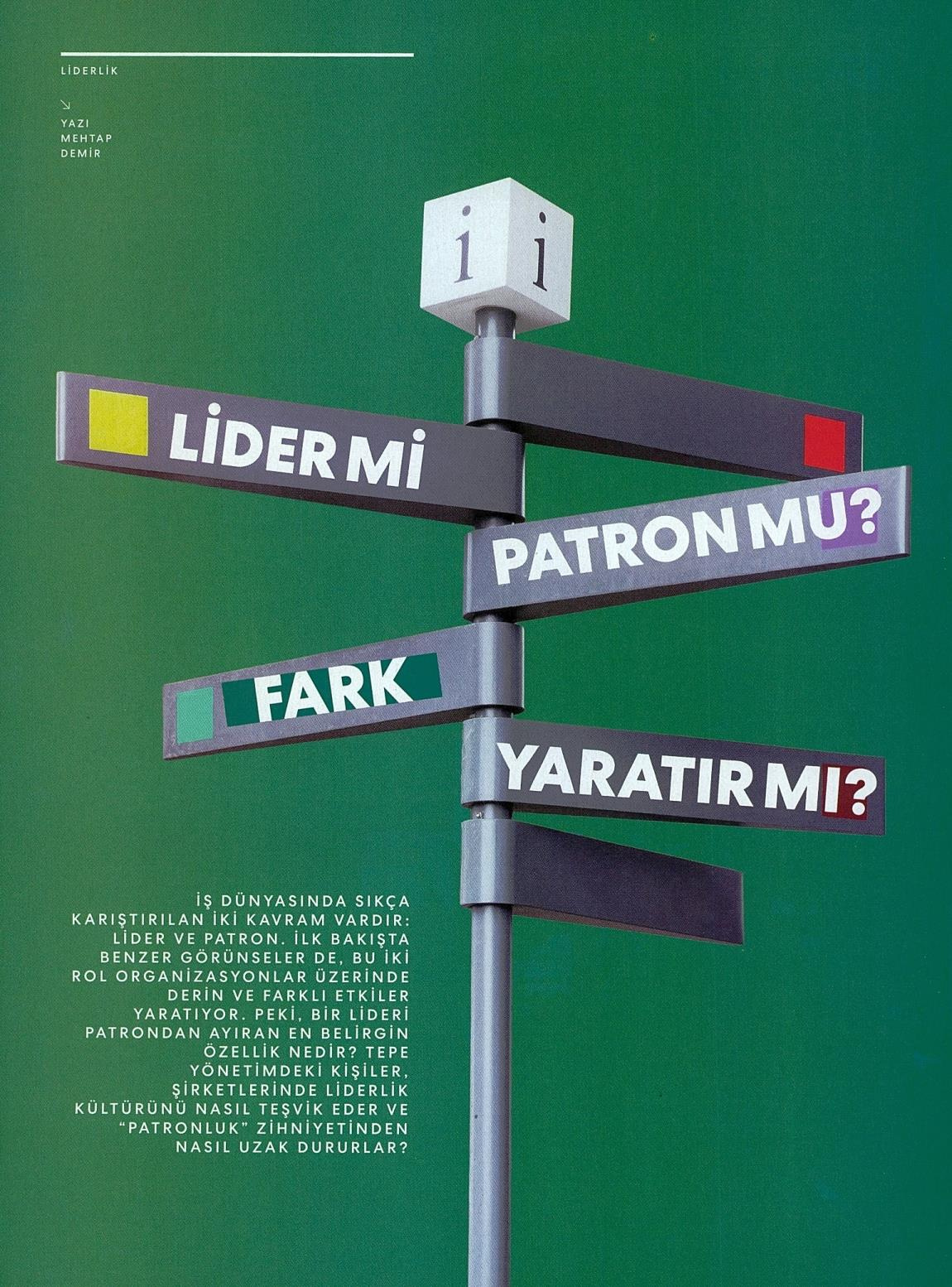
In the business world, two concepts are frequently confused: Leader and Boss. Although they may appear similar at first glance, these two roles create profound and distinct impacts on organizations. So, what is the most defining characteristic that separates a leader from a boss? How do top executives encourage a leadership culture in their companies and distance themselves from the "boss" mentality?
According to a LinkedIn survey of 1,000 employees, 77% of participants shared that they report to a manager they view only as a "boss." The remaining 23% stated they have a manager they define as a true "leader." The reality revealed by this data has been frequently debated in the business world recently. It is noted that not every executive—including company owners—can be defined as a "leader."
What is the fundamental difference? In today's rapidly changing, people-oriented business world, leadership is not just a management style but a mindset that shapes corporate culture. Former U.S. President Theodore Roosevelt expressed this difference as: "The leader leads, and the boss drives." This emphasizes that leadership is based on guidance, while being a boss relies on coercive attitudes. Organizational psychologist and author Adam Grant summarizes the importance of growth: "Strong leaders face their critics and improve themselves. Weak leaders silence their critics." This highlights the critical role of transparency and open communication in leadership.
According to Gallup’s 2025 Global Workplace report, global "employee engagement" dropped from 23% to 21%, and manager engagement fell from 30% to 27%. This gap corresponds to a loss of approximately $438 billion in the global economy. Gallup analyses show that 70% of a team's engagement level depends on their manager. Jim Harter, Gallup's Chief Scientist, emphasizes that successful teams have meaningful one-on-one communication at least once a week, where managers set clear expectations and provide continuous feedback. However, only 44% of managers receive formal leadership training, which explains why the "boss" approach remains prevalent.
Research from Burns Leadership Consulting shows that poor leadership is the primary reason 32% of employees voluntarily leave their jobs. Lack of support, inadequate communication, and misalignment with goals drive employees away. Finding, hiring, and onboarding new employees costs 1 to 2 times the annual salary. Furthermore, according to Gallup, if the global workforce became fully engaged, it would add $9.6 trillion in productivity to the economy—a 9% increase in global GDP. The classic "boss" model is becoming unsustainable both economically and structurally.
According to Murat Yeşildere, Senior Partner at Egon Zehnder, bosses are generally command-and-process oriented, while leaders walk the path alongside their teams, building trust and providing inspiration. "Not every boss is an effective leader," says Yeşildere, emphasizing that for sustainable success, leaders must unlock and encourage their team's potential. He believes companies must first create transparent communication environments that provide psychological safety.
Leadership is a responsibility to create impact before it is a title. Bahar Uçanlar, General Manager of Diageo Turkey, puts it clearly:
"While titles that come with authority rank high on the organizational chart, 'leadership' begins by earning a place in people's hearts and minds."
According to Uçanlar, a leader is someone who listens, inspires, and initiates change. "Sometimes the most effective leader is not in the highest position in the organization, but the teammate who guides their surroundings through their behavior," she says. At Diageo Turkey, she emphasizes a trust-based corporate culture where every employee can show leadership within their sphere of influence. She summarizes their systematic support as: "We have programs that distribute authority, encourage feedback, embrace differences, and focus on development."
For Emre Hantaloğlu, General Manager of Lenovo Turkey, leadership is about uniting people around a common vision: "A position grants a job description; leadership creates belonging and inspiration." He argues that in the technology sector, a leader must be someone who learns, teaches, and supports growth.
Cem C. Işık, CEO of Madame Coco, defines the essence of leadership as: "As the position grows, the ability to shrink the ego is the key to true growth." He utilizes a "Stop, Start, Continue" culture to collect anonymous feedback every six months. "Leadership is the courage to say, 'You're right, I changed this.' The leader of the new era is not the one who commands, but the one who persuades."
Seren Çankırı, Board Member for Marketing at PepsiCo Turkey, believes that "Position is a title, while leadership is a concept evaluated by behavioral attitude and the impact created." She emphasizes that leaders sharing moments of vulnerability opens the door for team spirit.
Dr. Bahri Danış, Senior President of NTT DATA Business Solutions META and CEO of Turkey, defines leadership as the art of establishing self-sustaining systems. "Passion is indispensable in leadership; passion polishes talents," he says.
Nilüfer Şener, Founder and CEO of Beauty&More, emphasizes that while bosses focus on what to do, leaders focus on "how we can achieve this together."
Finally, Müge Yalçın, Managing Partner of MY Executive, points out that the term "boss" is often unfairly equated with a manager who only takes power from their title. "These are actually managers playing 'boss.' A true leader gains power not from position, but from strong relationships and earned respect."